How to Recover Your Kentucky Bluegrass Lawn After a Michigan Winter
Keast Lawn & Snow • April 2026 • East Lansing, MI
Michigan winters are tough on Kentucky Bluegrass, but the good news is that KBG is one of the most resilient cool-season grasses and recovers well when given the right spring care. Your recovery plan should include clearing debris, applying pre-emergent before soil temperatures hit 55°F, waiting until the lawn is actively growing before fertilizing, mowing at 3 to 3.5 inches, and scheduling aeration and overseeding for fall if the lawn has significant thin spots.
Your Lawn Can Come Back Strong
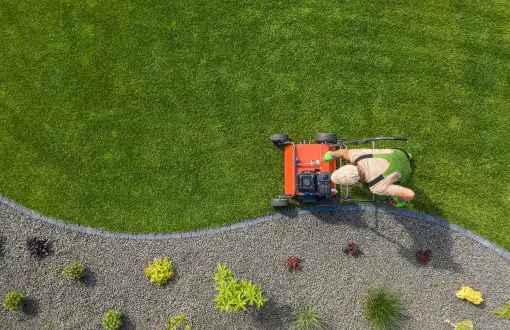
If you are a homeowner in East Lansing, Lansing, or anywhere in mid-Michigan, you know the drill. Winter hangs on forever, and when the snow finally melts, what you see underneath is not always encouraging — matted grass, brown patches, and spots where the plow pushed salt and gravel onto the turf. Take a breath. Kentucky Bluegrass is built for this. It is one of the most winter-hardy lawn grasses available, and its ability to spread through underground rhizomes gives it a recovery mechanism that most other grasses do not have. With the right steps in the right order, your lawn can go from looking defeated in April to looking great by June.
Step 1: Clean Up, But Do Not Overdo It
The first thing your lawn needs in spring is to be cleared of debris. Sticks, leaves, and any material that blew in over winter should be removed so the grass can get sunlight and air circulation. Light raking of matted areas helps separate grass blades that have been pressed flat under snow all winter, allowing sunlight to reach the crowns of the grass plants and encouraging them to start growing. Focus on areas where the grass looks especially matted or where snow was piled up.
What you want to avoid is aggressive dethatching too early in the season. Michigan lawns in April are just beginning to wake up, and the grass plants are still fragile. Heavy dethatching or power raking at this stage can tear up root systems and do more harm than good. If your lawn needs serious dethatching, late spring or early fall is a better time when the grass is actively growing and can recover quickly.
Step 2: Pre-Emergent Weed Control
Pre-emergent herbicide prevents crabgrass and other summer annual weeds from germinating in your lawn. It works by creating a chemical barrier in the top layer of soil that stops weed seeds from establishing roots. In the Lansing area, the window for pre-emergent application is typically mid-March through mid-April, depending on the year. The trigger is soil temperature: once soil temps at a 2 to 4-inch depth reach 55 degrees consistently, crabgrass germination begins. You want the barrier in place before that happens.
If you are reading this in late April and you have not applied pre-emergent, it may still provide some benefit, but effectiveness decreases with each passing week. Some products containing dithiopyr can offer early post-emergent control of crabgrass that has just started to germinate, so it is not a lost cause.
Step 3: First Mowing at the Right Height
Once your Kentucky Bluegrass is growing actively enough to need mowing — usually mid to late April in the Lansing area — set your mower to 3 to 3.5 inches. This is taller than many homeowners expect, but it makes a significant difference in how your lawn performs. Taller grass shades the soil, which helps retain moisture, reduces weed germination, and keeps root-zone temperatures more stable during temperature swings.
For your first mow, you may want to drop the height by half an inch to clean up some of the dead winter material, then raise it back to your maintenance height for subsequent mowings. And as always, never remove more than one-third of the blade height in a single mowing.
Step 4: Spring Fertilization (Light and Well-Timed)
Kentucky Bluegrass benefits from a light spring fertilizer application once it is actively growing. A slow-release nitrogen fertilizer applied at 0.5 to 0.75 pounds of nitrogen per 1,000 square feet is ideal for April or early May. This gives the grass what it needs to green up and fill in without the surge of top growth that makes the lawn more susceptible to disease and more demanding to mow.
The most important fertilizer application of the year for Kentucky Bluegrass in Michigan is actually in the fall, not the spring. Fall fertilization drives root development and carbohydrate storage that fuels strong spring green-up the following year. If your budget only allows for one application, fall is where to put it.
Step 5: Assess the Damage and Plan Repairs
Once your lawn has been growing for a few weeks — typically by mid-May — you will have a much clearer picture of what survived winter and what did not. Because Kentucky Bluegrass spreads through rhizomes (underground runners), it can fill in damaged areas on its own given time and proper nutrition. Small bare spots may close in naturally over the summer without any seeding.
For larger bare areas, the best approach is to plan for overseeding in September. Fall is the ideal seeding window for Kentucky Bluegrass in Michigan because the soil is warm, air temperatures are cooling, and weed competition is declining. Spring seeding can work but faces challenges from summer heat and the inability to use pre-emergent herbicide in seeded areas.
Common Post-Winter Issues in Lansing-Area Lawns
Snow Mold
Appears as circular gray or pink patches of matted, crusty grass, often in areas where snow lingered the longest. Snow mold is usually cosmetic — the grass beneath it is typically alive. Gently rake the matted material and let sunlight reach the crowns, and the grass will grow through it within a few weeks.
Salt Damage
Common along sidewalks, driveways, and roads. Salt draws moisture out of grass plants and creates brown, dead margins along paved surfaces. Flush these areas with water once the ground thaws to dilute the salt. If damage is severe, add gypsum to help neutralize the sodium and plan for overseeding in fall.
Vole Damage
Appears as winding trails or runs through the lawn where voles tunneled under the snow and fed on grass. These trails look alarming but typically fill in on their own as the grass starts growing. Light raking helps the grass recover faster.
Let Us Help Your Lawn Come Back Stronger
Keast Lawn & Snow provides spring cleanup, dethatching, fertilization, and ongoing maintenance for residential and commercial properties throughout East Lansing, Lansing, Okemos, Holt, Dewitt, Grand Ledge, Charlotte, Potterville, and Dimondale. As a family-owned company, we treat every property like our own, and our 100% satisfaction guarantee means if you are not happy, we will make it right.