

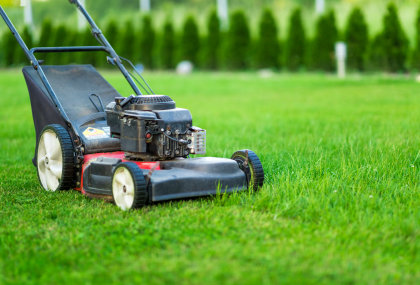
Short Answer: Cool-season grasses common in Michigan (Kentucky bluegrass, perennial ryegrass, tall fescue, fine fescue) should be mowed at 3.5 to 4 inches through summer heat. That is taller than most homeowners cut and feels almost unnaturally tall when you first try it. The effect is dramatic: 10 to 15 degree reduction in soil surface temperature, dramatically reduced weed pressure, deeper root depth, lower disease pressure, and better drought tolerance. The change is free, takes 30 seconds on the mower, and consistently produces the best summer survival for cool-season Michigan lawns.
If you have ever wondered why some lawns in East Lansing, Okemos, and Haslett look great all summer while yours struggles, the answer is often hidden in plain sight: how high those lawns are cut. The lawns that survive Michigan summer cleanly are almost always mowed taller than most homeowners think they should be. We want to walk through exactly what the right height is, why it works, and why it is one of the highest-leverage changes you can make.
Why Mowing Height Matters So Much
Grass blades photosynthesize. They produce the food the plant needs to grow roots, repair damage, and survive stress. The more leaf area present, the more food produced. The food produced builds root depth.
Taller cuts means more leaf area, which means more food, which means deeper roots. Deeper roots reach moisture in deeper soil and survive heat and drought far better than shallow roots.
Taller cuts also shade the soil surface. A 3.5 inch lawn has soil surface temperatures 10 to 15 degrees cooler than a 2 inch lawn on the same day. The cooler soil retains moisture longer and protects the grass crowns from heat damage.
Taller cuts crowd out weeds. Most weed seeds (crabgrass, dandelion, plantain, broadleaf annuals) need sunlight reaching the soil surface to germinate. Dense tall turf blocks that light. Lawns mowed at 4 inches have dramatically fewer weed seedlings than lawns mowed at 2 inches.
The Right Heights by Grass Type
Kentucky bluegrass. Summer height 3 to 3.5 inches. Can go to 4 inches during peak heat. The most common cool-season grass in established Michigan lawns.
Perennial ryegrass. Summer height 3 to 3.5 inches. Often mixed with Kentucky bluegrass in residential blends.
Tall fescue. Summer height 3.5 to 4 inches. The most heat-tolerant cool-season grass commonly used in Michigan. Benefits from the upper end of the range during peak heat.
Fine fescue. Summer height 2.5 to 3 inches. The shade-tolerant cool-season grass often found in shaded areas of mid-Michigan lawns.
For mixed cool-season lawns (which describes most Michigan residential lawns), 3.5 inches is a good universal target through summer.
The One-Third Rule
Beyond the target height, the other critical mowing principle is the one-third rule. Never remove more than one third of the blade height in a single cut. If your target height is 3.5 inches, mow before the lawn exceeds 5 inches.
Cutting more than one third at once stresses the grass severely, exposes the soil and crowns to sunlight, and can produce visible damage that takes weeks to recover from. This is especially true in summer heat.
In practical terms, the one-third rule means mowing every 5 to 7 days during active growth in May and June, then less frequently (every 7 to 10 days) as summer slows growth.
The Mower Setting Reality Check
Most residential mowers have height adjustments from about 1 inch to 4 inches in half-inch increments. Many homeowners do not know what setting their mower is currently using. Walk to the mower and check before reading further.
The actual cut height is the distance from the mower deck setting to the wheel position. On most rotary mowers, position 3 or 4 (out of 5 or 6 positions) typically produces a 3 to 4 inch cut. Verify on your specific mower by measuring the cut grass after one mow.
If your mower cannot cut as tall as 3.5 inches, that is a problem worth addressing. Most newer mowers can. Some older or specialty mowers cannot.
Blade Sharpness
Even with the right height, a dull blade undermines the result. Dull blades tear the leaf tips rather than cutting them cleanly. The torn tips brown within 24 hours, giving the lawn a hazy white look 2 days after mowing. The torn tissue also provides entry points for disease pathogens.
Sharpen the blade at the start of each season at minimum. For most residential mowers, sharpening twice a season produces noticeably better cut quality.
Common Pushback (And Why It Is Wrong)
“My lawn looks shaggy at 3.5 inches.” It looks higher than what you are used to, but it does not actually look shaggy with proper mowing frequency. Within a season your eye adjusts and the lower height eventually looks too short.
“I want to mow less often, so I cut shorter when I do mow.” This is exactly the wrong logic. Cutting short on infrequent mowings stresses the lawn severely. Mow at the right height more frequently. The total mowing time is similar.
“Tall grass looks unprofessional.” Golf courses mow short because they have specialty grass, daily attention, and specific aesthetic goals. Your residential lawn is not a golf course. Tall properly mowed cool-season turf looks lush, healthy, and intentional rather than unkempt.
“My neighbor mows at 2 inches and their lawn looks great.” It usually does not look as great as the curb-view suggests. Closer inspection often reveals weed pressure, disease activity, and thinning that the homeowner does not see.
When You Can Cut Shorter
Specific situations where shorter cuts make sense. Last fall mowing before winter: 2 to 2.5 inches to prevent snow mold (in conjunction with raking leaves). First spring mowing: 2 inches to remove winter debris. Newly seeded areas during initial establishment: 2 to 2.5 inches until the lawn fills in. Special-use areas like sports practice zones if you have them.
For general summer mowing on most lawns, stay at 3.5 inches or above.
The Compound Effect Over Multiple Seasons
Lawns that switch from short mowing to the recommended 3.5 inch height typically show visible improvement within 4 to 6 weeks. The longer-term effects compound over multiple seasons. Year one: noticeable weed reduction and better summer color. Year two: deeper root systems, dramatically reduced disease pressure, lower fertility requirements because the lawn is healthier. Year three and beyond: the lawn becomes self-supporting in ways that lawns mowed too short never achieve. Some homeowners report cutting their fertilizer cost in half within 3 years of switching to taller mowing because the lawn no longer needs the rescue feedings.
Adjusting Your Schedule to the Right Height
Beyond the height itself, the mowing schedule changes when you switch. At 2 inches, you may have been mowing every 7 days because the lawn looked shaggy quickly. At 3.5 inches, you mow before the lawn exceeds about 5 inches, which works out to about every 7 to 10 days depending on growth rate. During peak May and June growth, weekly mowing is right. During slower August growth, every 10 to 14 days works. Watch the lawn rather than the calendar. The one-third rule is more important than the day of the week.
Mowing Patterns That Help
Beyond height and frequency, the pattern you mow matters. Change direction every mow. Mowing the same pattern week after week creates wear lines in the lawn and trains grass to lean a specific direction. Alternating between horizontal, vertical, and diagonal patterns produces healthier turf and a cleaner appearance. For larger lots, this matters more than for small yards. For postage-stamp yards, the difference is minor.
What to Do With the Clippings
Mulching clippings back into the lawn returns nutrients and organic matter that build soil health over time. Recent research shows mulching can reduce fertilizer needs by 25 to 30 percent over multiple years. The exceptions: bag clippings during heavy growth that produces clumps on the surface, bag during weed seed season to reduce seed return to the lawn, and bag the final fall mowing to remove leaf debris. For most summer mowings, mulching is the right choice for the lawn.
Frequently Asked Questions
What if my lawn already shows summer stress at the current height?
Raise the height immediately. The taller cut reduces ongoing stress and supports recovery.
Will tall grass slow weed control?
It actually helps weed control. Tall dense turf is the best preventive against weed germination.
Do I need different equipment for taller mowing?
Most residential mowers can cut at 3.5 to 4 inches. Some older or specialty mowers cannot. Verify your specific mower.
Should I bag or mulch clippings?
Mulching is better for the lawn (returns nutrients and organic matter). Bag only when clippings are heavy enough to clump on the lawn or during weed seed season to reduce seed return.
What to Do Next
Check your mower height setting today. If it is below 3 inches, raise it. The change is free and the result will be visible within 3 to 4 weeks.
If you want help dialing in mowing height plus the other practices that keep cool-season lawns healthy through Michigan summer, we are glad to walk your property and put together a custom plan. Call us at 517-894-5792 or visit keastlawn.com. We serve East Lansing, Lansing, Okemos, Haslett, Williamston, Holt, DeWitt, and surrounding mid-Michigan communities.