Leaf Removal
Should You Mulch Leaves Into the Lawn or Remove Them?
Keast Lawn & Snow • October 2026 • East Lansing, MI • 8 min read
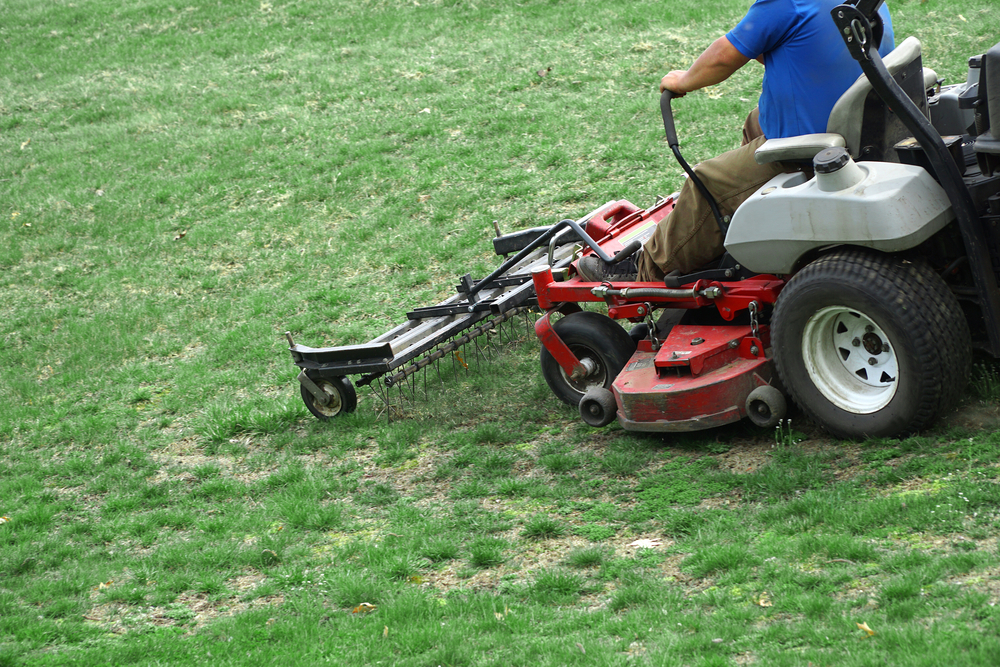
Short Answer: Mulching leaves into the lawn with a mower works well and returns organic matter and nutrients to the soil. It has a volume limit. A light to moderate leaf layer can be chopped fine enough to filter down between the grass blades, which is the test that matters. A heavy layer cannot, and mulching it just produces a smothering blanket of shredded leaves instead of whole ones. Most East Lansing properties with mature trees need a combination, mulching early drops and removing the heavy ones.
There is a genuine disagreement in most neighborhoods about this. Some people mow their leaves in and their lawns look fine. Others insist leaves have to come off entirely. Both groups are partly right, and the difference between them is almost entirely about volume.
Worth noting that the research underpinning the mulching recommendation came out of turf programs including the one at Michigan State, right here in East Lansing. This is not a practice borrowed from a different climate. It was studied on lawns like ours.
What Mulching Actually Does
Mulching means running a mower over fallen leaves repeatedly until they are chopped into small pieces that fall down between the grass blades and reach the soil surface.
Once there, they decompose over the following months. Soil organisms break them down, and the organic matter improves soil structure and nutrient holding capacity. The leaves also return nutrients they pulled from the soil during the growing season, including a meaningful amount of nitrogen and other elements.
On clay influenced soils common around the Lansing area, that organic matter contribution is genuinely valuable. Building organic matter is slow work and leaf mulching is one of the few ways to do it every year at no cost.
There is a weed suppression benefit as well. Research has associated leaf mulching with reduced dandelion and crabgrass pressure the following season, likely because the mulch layer interferes with seed germination at the soil surface. That is a secondary benefit rather than a reason to do it on its own, but it is a real one.
None of that requires special equipment. A standard rotary mower does it, though a mulching blade and a closed discharge chute produce finer particles and better results.
The Volume Limit
Here is where the disagreement resolves, and it is a practical test rather than a rule of thumb about inches.
Mulching works when the chopped leaf material can filter down between the grass blades and reach the soil. It fails when there is so much material that the pieces sit on top of the canopy instead.
So the test is what the lawn looks like after you mow. Walk out and look down. If you see grass with bits of leaf scattered down in the canopy, it worked. If you see a continuous layer of shredded leaf material sitting on top of the grass, there was too much, and you have created exactly the smothering layer you were trying to avoid.
Shredded leaves in a heavy layer are arguably worse than whole ones, because the smaller pieces pack more tightly and mat more thoroughly under snow.
Multiple passes help and they are the main technique. Mowing the same area two or three times chops material progressively finer and helps it work down. A single pass over a heavy drop rarely accomplishes it.
Frequency Is the Real Skill
The homeowners whose mulching works well are generally not doing anything technically different. They are doing it more often.
Mulching a light accumulation every few days through the drop season is easy and effective. Waiting until the drop finishes and attempting to mulch the entire season's volume at once does not work on a property with mature trees.
That frequency requirement is what makes mulching impractical for some households. It means going out repeatedly through October and November rather than dealing with leaves once. For a person who enjoys yard work and is home regularly, that is fine. For a household where the lawn gets attention on weekends, the leaves outpace them.
Dry leaves also chop far better than wet ones. Mulching after a rain, when leaves are matted and heavy, produces clumps rather than fine material and tends to clog the mower deck. Waiting for a dry afternoon makes the difference between a job that works and one that spreads wet clods across the lawn.
When Removal Is the Right Answer
Several situations call for taking leaves off the property rather than mulching them, and being clear about them prevents a lot of wasted effort.
Heavy drop volume is the main one. A property with several mature maples or oaks simply produces more material than a lawn can absorb, particularly during peak drop weeks. The math does not work no matter how many passes you make.
Oak leaves are the second consideration. They are tougher and more leathery than maple, they resist decomposition longer, and they are harder to chop finely. Oak heavy properties reach the volume limit sooner than maple heavy ones.
Thin or struggling lawns are a third. A dense healthy stand of grass has canopy for mulched material to filter into. A thin lawn does not, so the material sits on the surface and compounds the problem.
And the final cleanup before winter should generally be removal regardless of what you did earlier in the season. Whatever is on the lawn when snow arrives stays there until spring, and that is not the moment to be testing volume limits.
The Approach That Works for Most Properties
Around East Lansing, the practical answer for a typical lot with mature trees is a combination rather than committing to one method.
Mulch the early and light drops. Through late September and early October, when material is coming down gradually, mowing it in is efficient and returns real benefit to the soil.
Remove during peak drop. When the heavy weeks arrive and the lawn disappears under leaves within a couple of days, that volume needs to leave.
Remove on the final pass. The last cleanup of the season should leave the lawn clean going into winter, for the snow mold and vole reasons that make Michigan different from milder climates.
That mixed approach captures most of the soil benefit without accepting the winter risk, and it matches how leaf drop actually behaves rather than treating the whole season as one decision.
What Mulching Does Not Replace
One clarification worth making, because it comes up. Mulching leaves is not a substitute for a fall fertilizer application.
The nutrients returned by decomposing leaves are real but they release slowly, over months and into the following season, as soil organisms break the material down. A cool season lawn in October needs nitrogen it can use now, during the root building window, and leaf litter does not supply it on that timeline.
The two work together rather than competing. Mulched leaves build organic matter and soil structure over years. A properly timed fall feeding supports the plant this season. Treating one as a replacement for the other is a common misunderstanding.
Where the Leaves Go
If you are removing rather than mulching, the material has to go somewhere and the options vary by where you live.
Many communities in the Lansing area operate curbside yard waste collection with seasonal schedules, and some run loose leaf collection where crews vacuum piles raked to the curb. Programs, dates, and whether material must be bagged differ between municipalities and they change, so confirming with your own city or township is worth the few minutes.
Composting on site is an option for properties with room, and leaves are excellent compost material though they break down slowly on their own. Shredding them first speeds it considerably.
Beds are another destination. A layer of leaves over perennial beds functions as free winter mulch and insulation, and it is a legitimate use for material you are removing from turf. Keep it off the crowns of the plants themselves.
What we would discourage is burning, which is restricted or prohibited in many jurisdictions here and produces genuinely unpleasant air quality for neighbors. It is also a poor use of material that has real value as soil amendment.
What to Do Next
Run the test after your next mow. Look down at the lawn and determine whether you see grass with leaf bits in the canopy or a layer of shredded material sitting on top. That single observation tells you whether your property is in mulching range this week.
Increase frequency before you conclude mulching does not work. Most failed attempts are volume problems caused by waiting too long, not by the method itself.
Plan on removal for peak drop and for the final pass regardless of what you do earlier, since the winter risk in our climate is not worth taking for the sake of consistency.
If you would rather not track the volume week to week, we are here for that. Call Keast Lawn and Snow at 517-418-7772 or visit keastlawn.com. We are family owned and serve East Lansing, Lansing, Okemos, Haslett and the surrounding communities.