Leaf Removal
Why Leaving Leaves on Your Lawn Is Worse in Michigan Than Most Places
Keast Lawn & Snow • October 2026 • East Lansing, MI • 8 min read
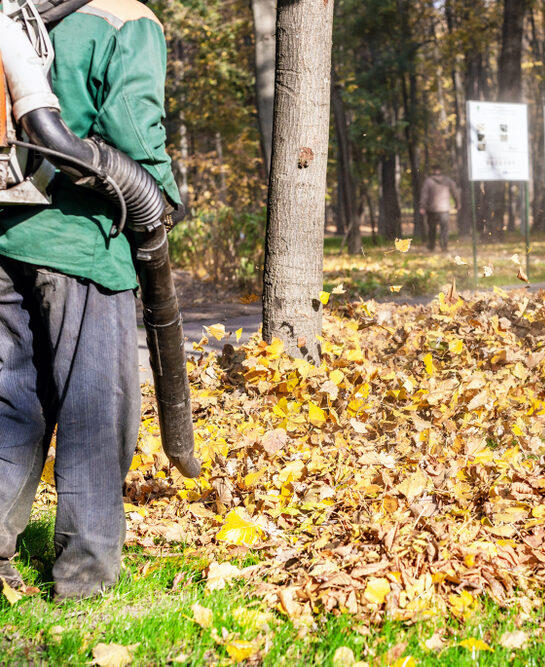
Short Answer: Leaves left on a lawn block light and trap moisture, and in Michigan that layer then spends four or five months compressed under snow. That combination is close to ideal for snow mold, the fungal disease that shows up as matted gray or pink patches at spring melt. Cool season lawns here are also doing their most valuable root growth in October, which a leaf layer interrupts. In warmer states an untidy lawn is mostly cosmetic. Here it produces damage you see in April.
Leaf cleanup gets treated as housekeeping, something you do because the yard looks better afterward. In most of the country that is roughly accurate. In mid Michigan it is not, and the difference comes down to what happens to that leaf layer between December and March.
The lawns we are called out to repair in spring are frequently lawns that went into winter under leaves. Here is what actually happens underneath and why the timing of cleanup matters more here than the tidiness of it.
What a Leaf Layer Does in the Short Term
Grass is a plant, and plants need light. A continuous layer of wet maple leaves blocks essentially all of it.
That matters more in October than at any other point in the year, because cool season grasses are in their most productive stretch right now. Kentucky bluegrass, perennial ryegrass, and tall fescue, which make up nearly every lawn around East Lansing, spend fall building roots and storing carbohydrates in the crown. Those reserves are what carries the plant through winter and fuels green up in April.
A lawn under leaves cannot photosynthesize, so it cannot build those reserves. Two or three weeks of heavy cover during the most valuable growing period of the year is a real setback, and it happens before any winter damage has even started.
Wet leaves also compress. A fluffy layer on a dry October afternoon becomes a dense mat after the first significant rain, and that mat holds moisture directly against the crowns of the plants. Once it reaches that state it stops drying out between rains, which is the condition that carries into winter.
Then Winter Arrives
This is where Michigan differs from most of the places writing lawn care advice.
Snow cover in our area regularly persists for extended stretches, and it presses the leaf layer flat against the turf. Underneath that snow, conditions stay cold, dark, and consistently damp for months. Air movement is essentially zero.
Those are the conditions snow mold requires. Gray snow mold and pink snow mold are fungal diseases that develop under prolonged snow cover, and the factors that favor them are exactly what a leaf layer contributes. Extended moisture against the crown, no light, no air circulation, and organic debris for the fungus to work through.
At melt, the damage is visible immediately. Matted circular or irregular patches of gray or straw colored grass, sometimes with a visible web of fungal growth across the surface. Pink snow mold produces patches with a pinkish cast at the margins.
Gray snow mold usually damages leaf tissue and the lawn recovers as growth resumes. Pink snow mold can attack the crown itself, and where it does, the grass does not come back. Those areas need seeding, which means a spring project that a fall afternoon would have prevented.
The Other Winter Problem
Voles deserve a mention because they cause damage people routinely misdiagnose as disease.
Meadow voles remain active all winter under snow cover, and they travel in runways at the soil surface. A layer of leaves gives them cover and protection from predators, which makes a leaf covered lawn considerably more attractive habitat than a clean one.
The damage appears at melt as narrow winding trails of chewed grass running across the lawn, often in loops and branching patterns. It is distinctive once you have seen it.
Vole damage is usually cosmetic and fills in over spring, but it looks alarming, and reducing the cover they use through winter reduces how much of it you get.
Which Leaves Cause the Most Trouble
Not all leaf litter behaves the same, and the mix in a given yard affects how urgent removal is.
Maple leaves, which dominate many East Lansing neighborhoods, are thin and they break down relatively quickly, but they also mat tightly when wet. A heavy maple drop produces a dense continuous sheet faster than most other species.
Oak leaves are tougher and more leathery. They resist decomposition considerably longer, so an oak layer persists well into spring rather than breaking down over winter. Oak leaves also tend to curl rather than lie flat, which means they trap more debris.
The species mix matters less than volume and timing. A light scattering of any leaf type is not a problem. A continuous layer deep enough that you cannot see grass through it is, regardless of what tree it came from.
The practical test is simple. Look down at the lawn. If you can see grass through the leaves, the lawn is still getting light. If you cannot, it is not, and the species that produced them does not change the answer.
Timing in Mid Michigan
Leaf drop here is not a single event, which is what makes cleanup a process rather than a chore.
Different species drop on different schedules, generally spanning from early October into November. Ash and some maples come down early. Oaks hold their leaves stubbornly, sometimes well past the point when everything else has finished, and some hold them into winter.
That staggering is why a single cleanup in mid October often is not enough. The yard looks finished, and two weeks later the oaks let go and it looks untouched again. Properties with a mix of species usually need more than one pass.
The deadline that matters is the ground freezing and the first lasting snow. Whatever is on the lawn at that point stays there until spring. In our area that typically means the window closes somewhere in November, though it varies year to year and it has closed early in some seasons.
Getting the final pass done before that window shuts is the single most important thing about fall cleanup timing.
What Else Belongs in the Same Visit
A few tasks pair naturally with leaf removal and they matter for the same winter reasons.
The final mow should leave the lawn somewhat shorter than summer height, around two and a half inches. Grass left tall going into winter mats down under snow and becomes another snow mold contributor. Scalping it is equally wrong, since the plant needs leaf tissue, so the goal is moderate rather than short.
Beds and around foundation plantings should be cleared of heavy leaf accumulation as well, since matted leaves against shrubs hold moisture the same way and provide vole cover right where it does the most damage to woody plants.
Gutters full of leaves are a separate problem that becomes a winter problem. Blocked gutters back up, and in our freeze and thaw cycles that trapped water contributes to ice dams along the roof edge. Clearing them once the drop finishes is worth putting on the same list.
What This Costs You in Spring
Worth putting a practical frame on it, because the damage is easy to dismiss as cosmetic until you are looking at the repair.
A lawn with gray snow mold generally recovers on its own once growth resumes, though it looks rough for several weeks and greens up later than a clean lawn. That is an inconvenience rather than an expense.
Where pink snow mold has damaged crowns, or where a heavy leaf mat smothered turf outright, the affected areas do not recover. Those need seeding, and seeding in spring is genuinely harder than in fall because new seedlings have to establish before summer heat rather than having a full autumn to root. A spring repair often means babying an area through July.
What to Do Next
Look at your lawn today and apply the visibility test. If you cannot see grass through the leaves in any area, that area is being smothered right now during the most important growing weeks of the year.
Plan for more than one pass if your property has a mix of species, and specifically plan for the oaks to come down after everything else. A single cleanup scheduled too early leaves the lawn covered for the part of the season that matters most.
Get the final pass completed before the ground freezes and lasting snow arrives, because that is the hard deadline. Everything still on the lawn at that point stays through winter.
Here is what to expect in spring. A lawn cleaned up properly greens up on schedule. A lawn that wintered under leaves frequently shows matted gray or pink patches at melt, and the areas where the crown was damaged need reseeding rather than patience.
If you would rather have someone handle the passes and time the final one correctly, we are here for that. Call Keast Lawn and Snow at 517-418-7772 or visit keastlawn.com. We are family owned and serve East Lansing, Lansing, Okemos, Haslett and the surrounding communities.