

Crabgrass Pre-Emergent Timing in Michigan: When You’re Already Too Late
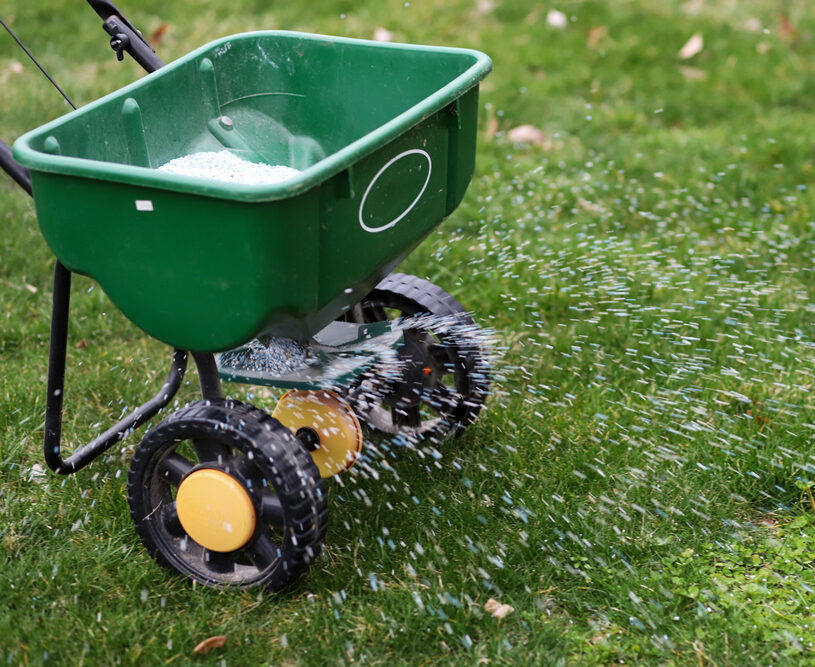
Short Answer: Pre-emergent crabgrass control in Mid-Michigan needs to be applied when soil temperatures consistently reach 50 to 55 degrees, typically late April through mid-May. After crabgrass has germinated and is visible above ground, pre-emergent does not work. The next option is post-emergent treatment, which is most effective when crabgrass is young (3 leaves or fewer per plant). After crabgrass tillers and matures, control becomes much harder. Here is how to know if you have missed the window, what to do now, and how to set up next year better.
If you are reading this in May or June and seeing wider, lighter green grass blades pushing up through your East Lansing lawn, the pre-emergent window for crabgrass has likely closed. Whether you applied pre-emergent that did not hold, or did not apply it at all, the response now is different from what it would have been in early spring.
Let us walk through how to read the situation and what to do.
The Pre-Emergent Window in Mid-Michigan
Crabgrass germinates when soil temperatures (measured at 4 inches deep) cross 55 degrees and stay there consistently. In our area, that threshold is typically reached in late April or early May, depending on the year. Pre-emergent products need to be applied before this point and need rain or irrigation to activate the soil barrier.
Practical timing for pre-emergent in East Lansing, Lansing, and surrounding areas: late March through mid-April most years. Applications later than that may still help, but they catch fewer of the germinating seeds.
Once you can see crabgrass blades above the soil, the pre-emergent window has closed for that round of germination.
How to Confirm It Is Crabgrass
Visual signs:
Wider blades than your fescue or Kentucky bluegrass turf grass.
Lighter, yellow-green color compared to the surrounding lawn.
Low, spreading growth pattern from a central point, with multiple stems radiating outward.
Mature plants produce seed heads that look like fingers radiating from a single point.
If you are unsure, take a clear photo of a single plant pulled with roots and compare to images online or send it to a professional for identification. Other plants like dallisgrass or quackgrass can look similar but need different treatment.
The Post-Emergent Window
Post-emergent crabgrass control products work best on young plants:
Best timing: 1 to 3 leaves per plant. Single application gives 80 to 90 percent control.
Acceptable timing: 4 to 5 leaves with tillering just beginning. Single application gives 50 to 70 percent control. Often needs a second pass.
Difficult timing: mature crabgrass with multiple tillers. Control rates drop further. May need 2 to 3 applications and partial control may be the realistic outcome.
So acting early matters once you see crabgrass. Every week of delay reduces the kill rate.
What Products Work
Several active ingredients control crabgrass:
Quinclorac is the most common professional choice. Effective on a wide range of crabgrass sizes and includes broadleaf weed control as a bonus.
Mesotrione bleaches the target weed for visible confirmation of activity. Effective on crabgrass plus several broadleaf weeds.
Fenoxaprop is grass-selective and useful in mixed lawns where you have desirable cool-season grass with crabgrass scattered through it.
Consumer-grade versions of these chemicals are weaker than professional formulations. Results often vary.
Avoiding Damage to Your Lawn
Some crabgrass control products can stress turf grasses, especially under heat. General rules for Michigan applications:
Apply when daytime temperatures are below 85 degrees. Late spring and early summer are usually within range.
Do not apply to drought-stressed lawns. Stressed grass cannot tolerate herbicide stress on top.
Schedule applications for early morning when possible, giving the herbicide time to absorb before heat builds.
Cool-season grasses like Kentucky bluegrass and tall fescue typically tolerate quinclorac well. Newly seeded areas should generally not be treated until the new grass has had a few mowings.
Why It Came Through
If you applied pre-emergent and crabgrass still came through, common explanations:
Application was too late. Soil temperatures had already crossed the threshold by the time the product went down.
Activation rainfall did not happen. Pre-emergent needs to be watered into the soil within a few days. Without it, the product sits on the surface and can lose effectiveness.
The barrier was disturbed. Aeration, dethatching, or heavy rainfall washing the soil can break the barrier.
Coverage was uneven, leaving gaps where seeds could germinate.
The lawn was thin enough that bare soil exposure let crabgrass find germination opportunities even where the barrier held.
Building a Lawn That Resists Crabgrass
The best long-term crabgrass control is not the herbicide schedule, it is turf density. Crabgrass needs sun on bare soil to germinate. A dense, healthy cool-season lawn shades the soil and prevents most germination even with imperfect pre-emergent.
Three habits that build density:
Mow at the upper end of the recommended range (3 to 4 inches for cool-season grasses). Taller grass shades soil and prevents weed germination.
Fertilize on a complete program. Hungry turf does not compete well against weeds.
Water deeply and infrequently. Deep roots produce thicker top growth.
Aeration and overseeding in fall fills in thin spots and reduces bare-soil exposure for the following spring.
Setting Up Next Year
The post-mortem on this year informs next year:
If the timing was off, plan an earlier application next year tied to soil temperature monitoring.
If activation rainfall was missing, plan to water the application in.
If the lawn is thin and weeds keep coming through, schedule fall aeration and overseeding to build density.
If your lawn service applied pre-emergent at the wrong time or without coverage, that is worth a conversation with them.
What to Do Next
If you have visible crabgrass in your East Lansing area lawn right now, time matters. The longer we wait, the harder control becomes. We are glad to come walk your lawn, identify exactly what you have, and apply the right treatment at the right rate. Reach out anytime.